Astronauts Cap Five-Year Marathon, Install Final Solar Array at the Space Station
NASA's Anil Menon and CSA astronaut Joshua Kutryk spent nearly seven hours outside the International Space Station installing the eighth and last of a new generation of solar arrays, finishing an upgrade begun in 2021.
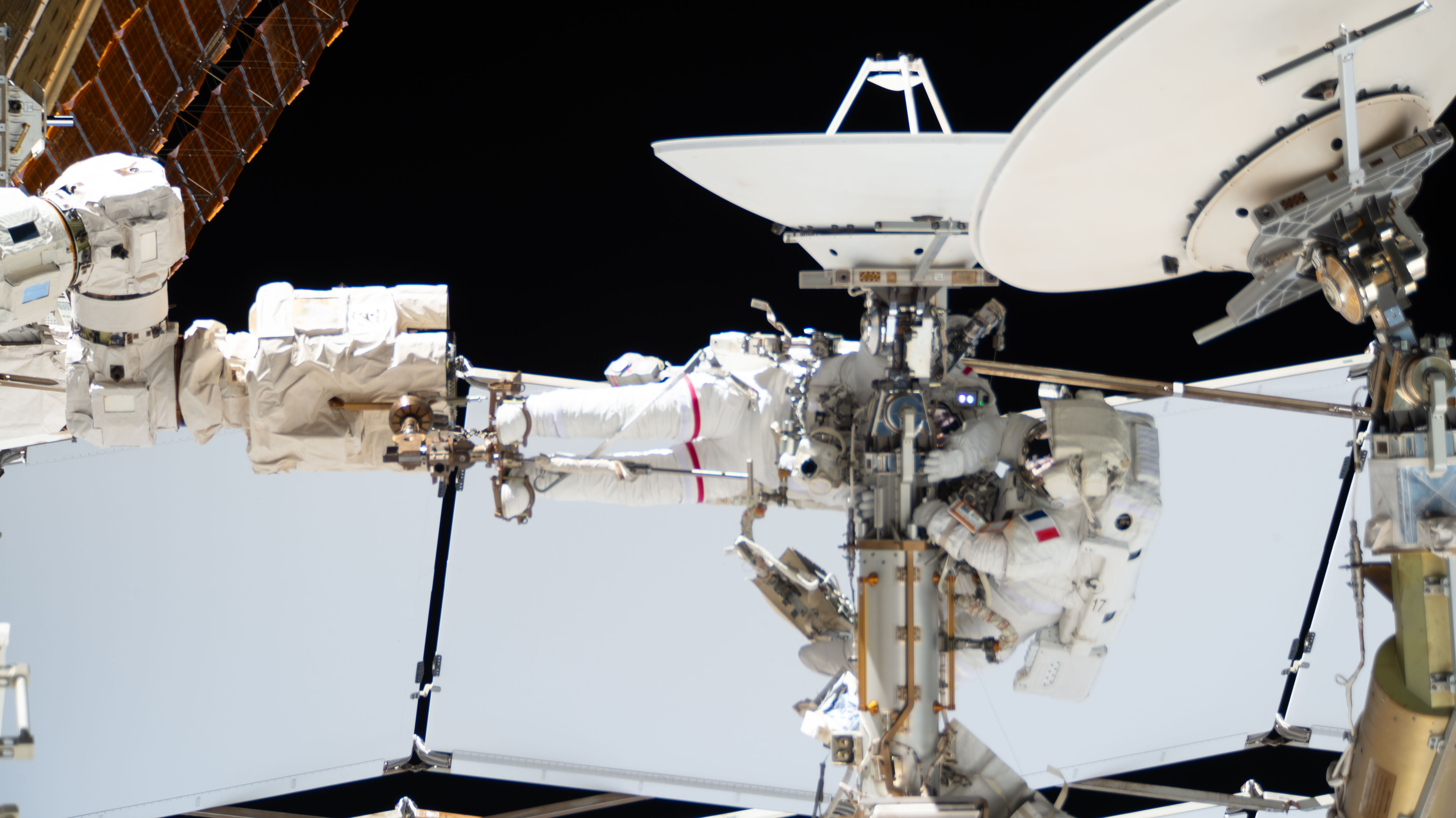
NASA astronaut Anil Menon and Canadian Space Agency astronaut Joshua Kutryk completed a nearly seven-hour spacewalk Thursday to install the final roll-out solar array on the International Space Station, closing out an upgrade campaign that has stretched across eight separate spacewalks and five years, according to NASA's own mission blog.
The spacewalk began at 8:36 a.m. EST and wrapped up at 3:35 p.m. EST, running slightly longer than the roughly six-and-a-half hours NASA had planned for beforehand. The pair installed and deployed the eighth and final International Space Station Roll-Out Solar Array, known by the acronym iROSA, onto the station's far truss structure — a section of the array field beyond the reach of the station's robotic arm, which NASA says made the final installation one of the more physically demanding of the whole campaign.
A 30 percent power boost, five years in the making
The project to replace the station's original, two-decades-old solar wings with newer, more efficient roll-out arrays began in 2021, when astronauts Thomas Pesquet and Shane Kimbrough deployed the first iROSA panel. Thursday's spacewalk was the eighth and last in that series. NASA has said the completed set of arrays will increase the amount of power available to the station by up to 30 percent, lifting its total generating capacity from about 160 kilowatts to roughly 215 kilowatts — power the agency says will help support a growing slate of science experiments and commercial activity aboard the aging outpost as it approaches the final years of its operational life.
The station's original solar wings, launched in pieces between 2000 and 2009, have degraded over more than two decades of exposure to the space environment and were producing noticeably less power than when they were new. Rather than replace the old arrays outright, NASA's roll-out panels unfurl in front of six of the station's eight existing wings, supplementing their output without requiring the older hardware to be removed.
A fitting handoff as the ISS nears retirement
Menon and Kutryk's spacewalk was the second of a planned pair, following an October 29 excursion in which the two installed and deployed the seventh array on the station's 2A power channel. Thursday's walk finished the job on the station's 3B channel, the last of the four power channels slated for the upgrade.
The completed upgrade arrives as NASA and its international partners plan for the space station's eventual retirement and deorbit later this decade, with commercial successor stations already in early development. Agency officials have framed the solar array campaign as both a practical necessity to keep the station powered through its remaining years and a proof of concept for the kind of in-orbit servicing and upgrade work future commercial stations may rely on.